
How to Make Miso Soup

 Add Preferred Source
Miso Soup is a classic Japanese dish that is not only easy to prepare but also packed with incredible flavors. This simple recipe uses traditional ingredients like dashi, nori, miso paste, green chard, green onions, and tofu to create a warm, soothing soup that’s perfect for any meal.


This post contains affiliate links. As an Amazon Affiliate, if you purchase through those links, I earn a small commission. Thank you!
For me, miso soup is pure comfort in a bowl, perfect for quiet nights or sharing with friends. I love that I can make it ahead, stash it in the fridge, or freeze a batch to have ready whenever I need something warm and nourishing.
Ingredients You’ll Need
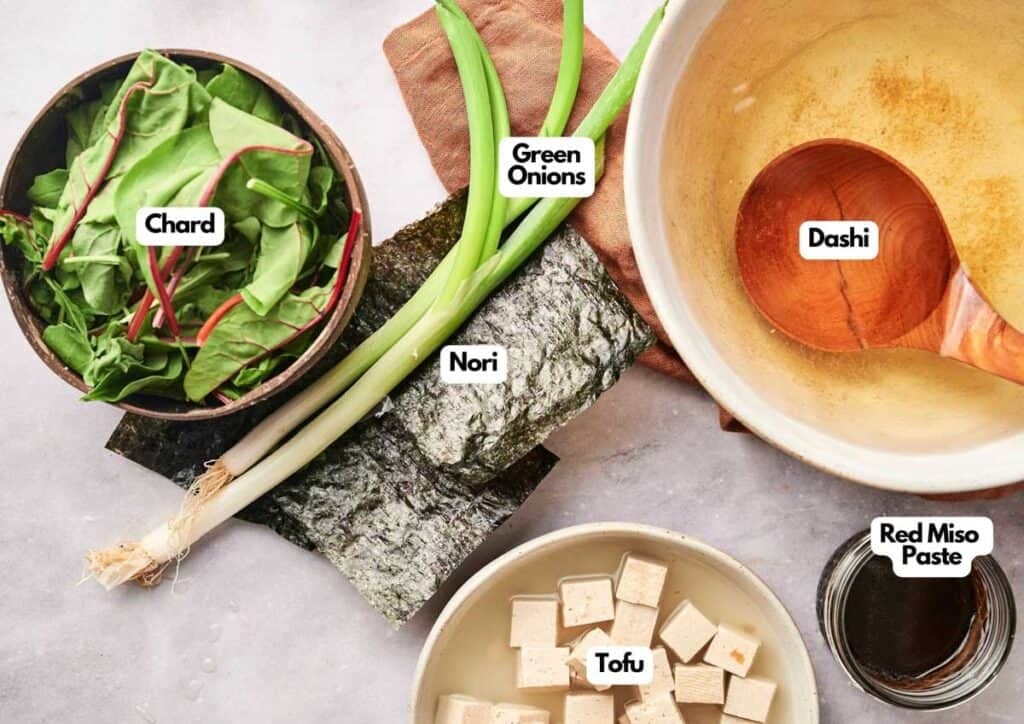
You’ll need all the ingredients in the photograph below.
How to Make Miso Soup with Step-By-Step Instructions
A complete printable recipe and the measurements in both US customary and metric are available in the recipe card below.
Just follow these steps, and you’ll be sipping on some savory goodness in no time!
Heat the Dashi
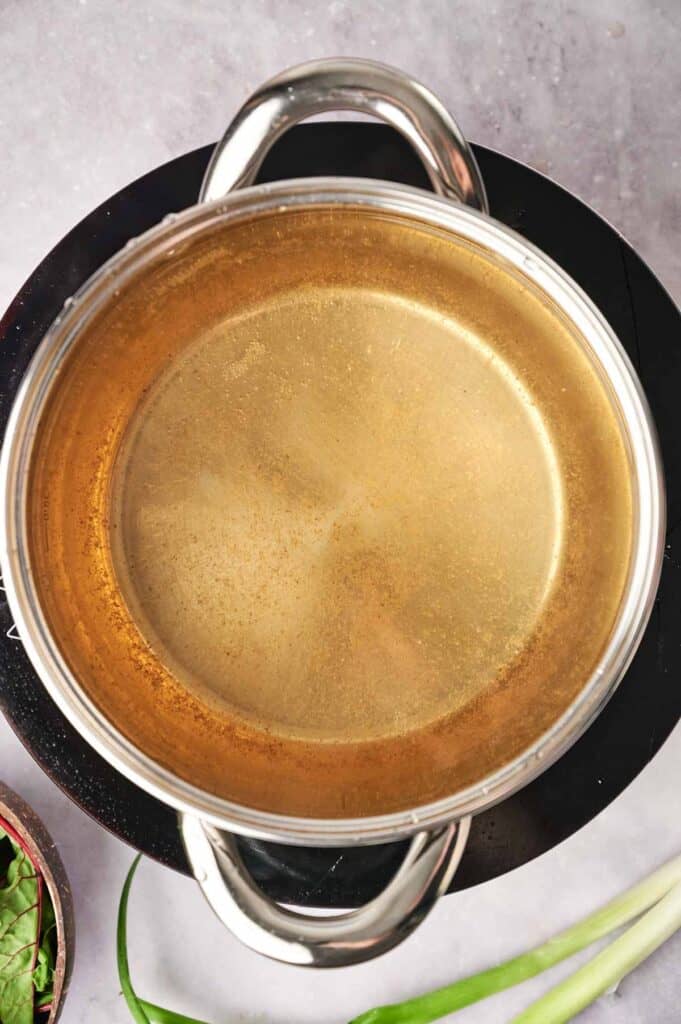
In a medium saucepan, heat your dashi over medium-high heat until it begins to gently simmer. Avoid bringing it to a boil to maintain the integrity of the flavors.
From Mandy’s Kitchen: Short on time most nights? My 30-Minute Cookbook has 45 dinners you can get on the table fast. Get your copy
Add Greens and Tofu
Add the chopped green chard and green onions (or scallions) to the simmering dashi, and then add in cubes of firm tofu. Let them cook for about 3-5 minutes until the greens are just tender.


Incorporate Nori and Miso
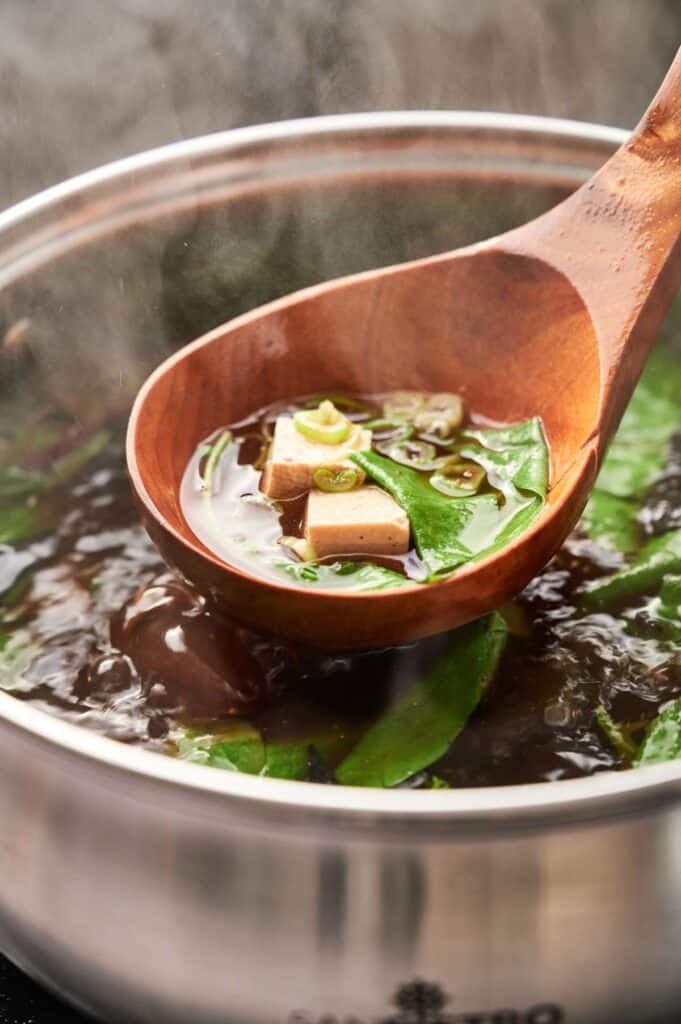
Cut the nori (dried wakame seaweed) into thin strips and stir them into the soup. The final, most crucial step is adding the miso paste.
To guarantee it melds smoothly without clumps, dissolve the miso paste in a small amount of the hot broth in a separate small bowl before stirring it back into the pot.
Final Touches
Once all the ingredients are in, remove the pot from heat. It’s important not to boil the soup after adding the miso to preserve its flavor and nutritional benefits.
Give the soup a gentle stir, taste, and adjust the seasoning with additional miso, soy sauce, or a pinch of sea salt if needed. Serve your soup warm, and enjoy the comforting umami flavors.

Recipe Notes and Expert Tips
To make your miso soup recipe as delicious as possible, here are some handy tips and tricks:
- Types of Miso: Made out of fermented soybeans, white miso or yellow miso paste is ideal for a lighter, sweeter soup, while red miso paste brings deeper, saltier flavors. Experiment to find your favorite!
- Dashi: Real dashi broth is the foundation of authentic miso soup. For the best flavor, try making your own homemade dashi with bonito flakes and kombu, or use high-quality dashi granules in cold water as a time-saver. If you don’t have any, you can substitute it with a simple vegetable broth or even just water, though you’ll want to amp up the other flavors to compensate.
- Tofu: Silken tofu is traditional and wonderfully soft, but if you prefer a bit more texture, firm tofu holds up well in the hot broth.
- Veggies: Beyond green chard, feel free to add shiitake mushrooms, carrots, spinach, or kale for extra greens. Just remember, softer veggies go in later, so they don’t overcook.
- Avoid Boiling: Once you’ve added the miso paste, avoid boiling the soup to keep the flavors intact and maintain the health benefits of the live cultures in the miso.
How to Store Leftover Miso Soup
Leftover soup? No problem! Here’s how to keep it fresh:
- Cool and Airtight: Let the soup cool to room temperature, and use an airtight container to store your soup in the refrigerator.
- Refrigerate: This soup tastes best when eaten within a couple of days, so try to consume leftovers within 2-3 days for optimal flavor.
- Reheat: Gently reheat the soup on the stove over low heat—don’t let it boil, as this can affect the flavor and nutrients of the miso.
What to Serve with Miso Soup
This soup is delicious on its own, but also pairs well with so many dishes. Here are a few ideas to serve around your bowl of soup:
Sushi Rolls
No miso soup meal is complete without sushi. Pair your soup with a variety of sushi rolls, from the classic California roll to more intricate creations like spicy tuna or eel avocado rolls. The light and refreshing taste of sushi complements the salty depth of miso soup perfectly.
Tempura
Add a bit of crunch to your meal with some golden-brown tempura. Whether you opt for vegetables or shrimp, the crispy batter provides a satisfying contrast to the smooth and savory soup. Dip them in a side of tempura sauce for an extra flavor kick.
Japanese Pickles (Tsukemono)
These little bites of tangy goodness, such as pickled radish or cucumber, are not only a vibrant side but also add to the overall meal with their crisp texture and sharp flavors, giving a refreshing break from the richness of the soup.

More Asian Recipes You Will Love
If you love Asian food as much as I do, then you should check these recipes out.

Ingredients
- 4 cups dashi
- 1 sheet nori
- 4 tablespoons red miso paste
- ½ cup green chard chopped
- ½ cup green onions chopped
- ¼ cup firm tofu
Instructions
- Heat the dashi in a saucepan until it gently simmers.4 cups dashi
- Add the chard (or your choice of greens), green onions, and tofu to the broth.½ cup green onions, ¼ cup firm tofu, ½ cup green chard
- Cook for 5 minutes, then stir in the nori. Remove from heat, incorporate the miso mixture, and stir well.4 tablespoons red miso paste, 1 sheet nori
- Adjust seasoning with extra miso or sea salt as needed.
- Serve warm, and enjoy fresh!
Video
Notes
- Types of Miso: Made out of fermented soybeans, white miso or yellow miso paste is ideal for a lighter, sweeter soup, while red miso paste brings deeper, saltier flavors. Experiment to find your favorite!
- Dashi: Real dashi broth is the foundation of authentic miso soup. For the best flavor, try making your own homemade dashi with bonito flakes and kombu, or use high-quality dashi granules in cold water as a time-saver. If you don’t have any you can substitute it with a simple vegetable broth or even just water, though you’ll want to amp up the other flavors to compensate.
- Tofu: Silken tofu is traditional and wonderfully soft, but if you prefer a bit more texture, firm tofu holds up well in the hot broth.
- Veggies: Beyond green chard, feel free to add shiitake mushrooms, carrots, spinach, or kale for extra greens. Just remember, softer veggies go in later so they don’t overcook.
- Avoid Boiling: Once you’ve added the miso paste, avoid boiling the soup to keep the flavors intact and maintain the health benefits of the live cultures in the miso.
Storage and Reheating Instructions
- Cool and Airtight: Let the soup cool to room temperature, and use an airtight container to store your soup in the refrigerator.
- Refrigerate: This soup tastes best when eaten within a couple of days, so try to consume leftovers within 2-3 days for optimal flavor.
- Reheat: Gently reheat the soup on the stove over low heat—don’t let it boil, as this can affect the flavor and nutrients of the miso.
Nutrition
About the Author

Hey there! I’m Mandy
Mandy Applegate is a home cook, food blogger, and writer who believes the best meals are the ones shared with the people you love.
She’s all about easy recipes that taste amazing, the kind that make ordinary days feel a little more special and remind you why cooking at home matters.
She has been published on NBC, the Daily News, the Boston Herald, and the Chicago Sun-Times, amongst many others.


